
They’ve led teams, they’re not stressed about money, they want meaningful work—retired professionals make great teachers.
Jason Miller, training to become a teacher at 50, was tutoring a Tongan first-grader when he brought in a children’s book his wife’s cousin had written, Land and Sea. It was the first kids’ book Jason had seen written in both English and Tongan.
The student read through it, then got to the author photo on the back. He slammed both hands on the book to keep it open and stared at the picture. “I know her!” he said. Then he corrected himself: “I mean, she looks like someone I know.”
In that instant, the kid realized right then that people who looked like him wrote books. That reading wasn’t just something other people did, but a doorway to connection, representation, and to finally seeing yourself reflected in a world that so often erases you.
Jason watched the whole thing click into place and thought: “Okay, if I get chances to help kids make connections like that, I absolutely made the right call leaving law.”
Jason spent 20 years as general counsel before teaching kindergarten, and he brought skills schools need (data tracking, organizational systems, staying calm under chaos). But what makes him stand out isn’t his background: he chose teaching deliberately, not desperately, and that changes everything about how he shows up for his students.
Key Takeaways:
- Career-switchers bring professional skills schools desperately need: data tracking, team management, staying calm under pressure.
- They chose education after succeeding elsewhere, so they focus on students instead of climbing ladders or proving themselves.
- Schools need support systems that help experienced professionals transition into classrooms instead of screening them out.
Looking in all the wrong places
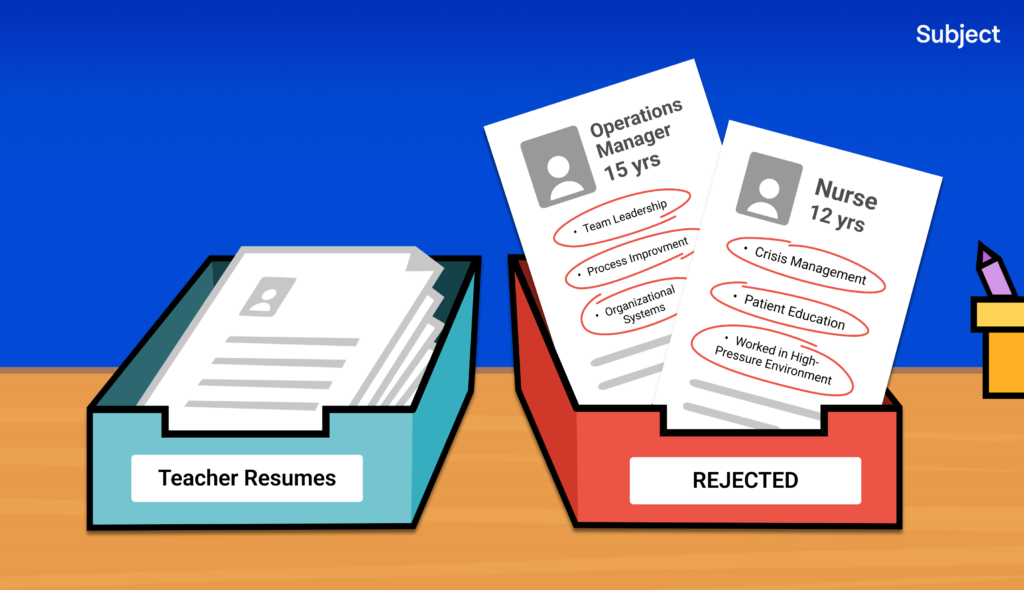
Jason’s corporate career prepared him for teaching in unexpected ways. He’d spent two decades reading data obsessively, managing teams under pressure, and staying calm when everything felt chaotic. When he walked into a Honolulu kindergarten classroom in a public housing development, those skills translated directly.
The real advantage is that Jason already “made” it. He built financial security, spent 13 years as general counsel, checked every professional success box. So when he entered teaching, he brought something most early-career teachers can’t: complete freedom from needing to impress anyone.
“There’s nothing that I need to prove to myself about who I am,” he said.
Career professionals who aren’t worried about proving themselves or climbing ladders because they already did that part. They just want work that matters—and classrooms need exactly what they’re offering.
What career-switchers bring (that schools need)
They’ve Already Managed Humans Who Push Boundaries
Kindergarteners are natural lawyers. (At least, that’s what Jason says.) Tell them not to make the middle finger gesture, and they’ll come back the next day with a carefully drawn illustration of it instead. “Oh, nope, that’s a good loophole, but we don’t draw it either,” Jason told his clever student.
This is what decades of professional experience trains you for: humans who test every rule and exploit every unclear boundary. Jason writes classroom rules the way he wrote contracts, closing loopholes before students find them. There are eight separate rules just for going down the slide safely, by the way.)
Lawyers aren’t an exception to this, either. Project managers know how to keep teams on task. Social workers already understand behavior patterns and de-escalation. Anyone who’s managed—or even just worked with—people professionally has dealt with boundary-testing before.
They Bring Organizational Systems Schools Need
In his legal career, Jason was obsessively data-driven. It was his philosophy. Track everything. Measure what matters. Make decisions based on evidence.
Now he applies that same rigor to kindergarten. He knows exactly which uppercase and lowercase letters each student can identify, which letter sounds they can produce, who can write simple CVC words, who can manipulate numbers using physical objects versus mental math.
Those organizational systems aren’t extra work for him. They’re just how he’s wired after 20 years in corporate settings. And they help him meet students exactly where they are instead of teaching to the middle.
The same goes for engineers who think in systems or accountants who track details obsessively. Marketing professionals also understand how to present information clearly. These skills translate directly to classroom management and student progress tracking.
They’re Not Stressed About Job Security
Jason can be completely honest in faculty meetings because teaching isn’t his only identity. He doesn’t need the job to define his success or fund his retirement. That financial security creates room to advocate for students, push back on bad policies, and take risks that early-career teachers often can’t afford.
“In some ways, the pressure’s off,” Jason explains. “I want to be good at this,but it’s not going to define me for the majority of my life.”
They Chose Education for Reasons That Last
Jason didn’t stumble into teaching because nothing else worked out. He chose it deliberately after reading research showing that students who read on grade level by third grade avoid terrible outcomes later. He’d been volunteering as a reading tutor for years and realized those sessions were becoming the best parts of his week.
People who choose teaching after succeeding elsewhere tend to stay engaged because the work itself is the reward. Former nurses might want to teach health science because they’ve seen what health literacy prevents. Former software developers want to teach computer science because they know which skills actually matter in the age of artificial intelligence.
When you choose teaching after building a first career, you’re solving for meaning, not survival. Just like Jason did:
“I was asked not too long ago, if you could have any job you wanted, and the money didn’t matter, what would you do? And I realized I’d do this. Become a teacher.”
Making the match happen
School districts aren’t the only ones struggling right now.
Teachers are burning out at rates nobody can ignore, early-career educators are drowning in student loans while trying to prove they belong, and classrooms desperately need people who can stay calm when the world’s on literal fire. Career-switchers solve multiple problems at once, but only if districts actually help them make the transition.
Jason succeeded because he found a teaching program that took him seriously and gave him real classroom experience before expecting him to manage 25 kindergarteners solo. He also had support systems most career-switchers won’t: a wife with an English PhD and 15 years of teaching experience, two sisters who teach, and a mom who was a children’s librarian.
“Having that support structure where I could just go ask questions, even the dumb ones, like ‘what am I gonna do on the first day of school?’ was very helpful.”
Most career-switchers won’t have Jason’s built-in support network. (As much as we wish it to be the case, not everyone has a spouse with a PhD in education or two sisters who teach.) That means districts need to create support systems for them.
Consider:
- Partner with career coaches who can help professionals see their corporate wins through a teaching lens
- Build onboarding that treats a 20-year project manager differently than a brand-new graduate
- Provide realistic timelines for certification and training for any curious career-switchers
- Talk to career-switchers already teaching about which skills surprised them most (usually staying calm under pressure and creating systems that actually stick)
- Use what you learn to find more people ready to trade their corner offices for construction paper
Once those systems are in place, go find the right people.
Look for people who chose education after doing something else successfully. They’re not trying to prove anything since they already know they’re capable. They just want work that matters.
“If you’re gonna work for 40 or 50 years, why not do something different for the last 5, 10, or even 20 years?” Jason said. “See if it’s something where you’ll find some deep meaning, and find some ways to give back.”
For the districts hiring, know that the talent is there and the shortage is real. You only have to connect the two.